
Failing! Adapt, modify and starting over

Back in december I discovered the “100 Days of Code challenge”
-> Website
It’s a challenge to motivate yourself to stick daily at least an hour to learn to code. Which language is your own choice. You fork the Github repo and keep track of your progress in a log. Pretty nice. I like that idea. So I started out.

But after a few days I ran into a problem — a few problems:
I have three kids and december is the time of the year when they bring “nice” presents from school: viruses. A lot of them and over and over again. Especially right now “after” the pandemic. Other sicknesses are hitting much more often. So, I was almost sick all the time from mid december up to mid february and I am still not that fit again. Our doctor told us that this is going on since mid november. Seems we were lucky to be a bit late to the party.

The other problem was a failing hard drive. Two failing hard drives! First my old one died and just a few weeks later the new one failed too. Just look for the bathtub-effect. So it took a while to get my system back running. And even now with the new hard drive I am a bit paranoid and looking all the time for first signs of failure. Let’s hope it works this time.

So, I failed. Shit. But ok. What can I do now. I want to learn Python or have to because imho I think it’s necessary (even when a lot of people tell you you don’t need it as a beginner in data analytics). So let’s modify it — adapt it to what I “need” and hit it again. Here now my new approach:

Basically, as I said before, I like the idea of the 100 days of code challenge. But doing “only” code every day is a bit too narrow in my case.
So I decided to start again but widen it up by adding also:

  • my language learning stuff (french and dutch)
  • the things I do around data (that’s maybe the main focus)
  • Interesting articles I’ve found (I like reading!)
  • my portfolio page is based on WordPress and I am looking (based on the project work) all the time for new solutions to display the work in progress. So also WordPress.
  • Python based on the very cool 30 days of Python GitHub repo (check it out! There are much more interesting tracks)
  • Other stuff worth mentioning
  • Writing / creating content

As you can see, my modification is a much broader approach towards learning. It’s new name is 100-days-of-data-and-python. Perhaps a bit bulky but who cares.

Learning is not only learning. If things not working out like planned before, you have to modify things. Make it work for you and modify it to your “reality” / how you prefer to learn things. Find out how you! learn best. That’s also part of learning.

Check it out if you want. Feel free to fork it, modify it based on your own needs and join learning things 🙂

It’s about time …

to go on with this project / the site / the learning.

After beeing sick and not sick anymore and again sick and not sick over the last ~ two months, I have to continue with the projects and the learning and the documentation on this site.
Also, one of my harddiscs died and I had to get a new one which was failing after a few days too. So, for the moment, with the next harddrive installed I am a bit paranoid to fall into the bathtub again. Always monitoring the disc with different tools and looking for signs of disc-failure. It’s annoying.

But these last months wasn’t a stop at all! I went after Python: played around a lot with Jupyter-Notebook, Google Collabs and the API of Anki (Flashcard learning tool) but more on that later. Also reading – like always.

I also decided to pick up on writing over on Medium about other stuff not directly related to the portfolio and the learning. Have a look 🙂

So let’s go!

A step in between – Une étape intermédiaire

Introduction: As you maybe have seen, I added a few things to the bikeshare project. Just basic stuff for the start about the company and the data – to get a very basic overview. But it’s only very basic and needs more depth. That’s the next step right now.

The problem: Very often Data Analyst tend to dive directly into the data what is more or less a mistake. We have to take a step back! We are here to help a company to get “insights” out of their data. Find hidden patterns, make the data visible and answer questions asked by the client (as far as possible based on the data you can get). And in order to do that, we have to understand the business. So, first of all, we have to dive into the business. Start a research, ask the people of the company (a lot!), come up with questions about the market, the environment, the problems they faced over time, doing a SWOT-Analysis, etc..
In short: Communicate! Get informed! Get to know the business!

The approach: And because of that (very important) point I decided to take a step back to do a better research of the profile for capital bikeshare. The cirumstance that it’s not really possible to ask “them”, leads me to the internet as the source – in short: using Google a lot! (Maybe I could ask them via email but I have my doubts about that. Maybe it is an idea for later and worth a try). So, my skills using a search engine aren’t that bad (imo) but maybe a refresher is not a bad idea. And right at that moment freeCodeCamp.org came around with a short tutorial. Very nice!

freeCodeCamp Search Operator Tutorial Video

So beeing reminded on the topic of advanced search techniques or operators is really a good thing. You can get so much more out of it by using these operators. Here is a list of them. Or check this one out. But check them out! In my opinion it’s a great idea to create a local cheat-sheet for yourself to have them ready to use (I will definitly do that within Notion!).

Another benefit by using them is, that it will improve your analytical skills! You have to apply more or less the same techniques and ways of thinking over and over again within the analytical process. It will always comes back and haunt you. So use and apply them from the very beginning.

But there is one specific topic in the tutorial, which is even more important. It’s the part about the critical thinking. Something that is often talked about but, very rarely, explained or elaborated on. Here, in this tutorial, you will see how to bring this into action. Just a few bullet points:

  • Find several perspectives
  • See when content was written and where it’s sourced from
  • Dont trust everything on forums
  • Be skeptical
  • Search result rankings are not indicative of accuracy
  • Verify with multiple sources when possible
  • Always go after a personal bias

I want to put a highlight on the “lateral browsing / lateral reading” which basically means “Don’t read a single webpage but do research about this website. Add sources and check their credibility.”. You do not read a website top to bottom but you will open multiple tabs “around” that page doing research about it. I wasn’t aware of the term “lateral reading” but I am happy that I’ve found it because it’s a reminder to stay up-to-date about search techniques, self reflection and the so-called personal bias. The second highlight has to be put on the personal bias. Think about it. It’s important.

Conclusion: This post came into beeing due to the reflection about the steps in the analytical approach and how to improve the skills towards the work on the bikeshare project and in general. I’ve found more than initially expected: from the search operators to a very nice example for applied critical thinking. In times of advancing AI like chatGPT and to be able to critically questioning and evaluate the results of it, that is something really important!
And what to do now? Using the operators and trying to be as self reflective as possible (and find additional sources).

The day after …

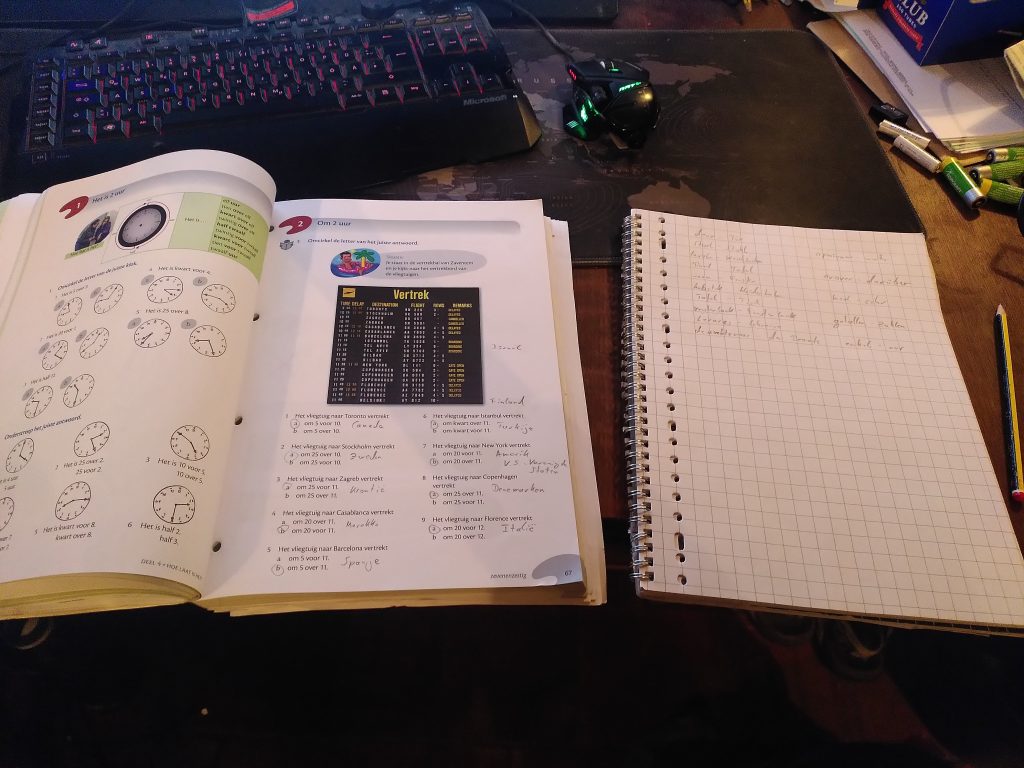
… the dutch exam. Three parts (writing, reading and listening) are now done. The fourth part, speaking, comes next tuesday.

So far I had no problems at all with these parts of the exam. I expected it to be much more difficult. But that’s ok. I always have to remember myself that I am speaking german. So for me the barrier is a lot lower.
The other facts are:

  • my kids are speaking it
  • the other parents from the school are talking in dutch
  • parent evenings are (mainly) in dutch
  • a while ago I started to listen to podcasts in dutch

So, at the end of the day, I already have a lot of immersion from different sides. I only can imagine how difficult it is for the ukrainian refugees who are also attending the course. A different alphabet, pronounciation and so on. I think it is more or less the same what I experienced when I had lessons in arabic back in Tübingen “a few” years ago.
For now, let’s find a way to speak dutch more often. Plan for the near future: Going over the vocabularies once more with the focus on “het” and “de”.

Learning Dutch

Apprentissage du néerlandais

Just a few thoughts on this topic.
Coming from Germany and also knowing English very well, makes it a lot easier to get into Dutch. But you have to be aware of a lot of false friends! Words which sound familiar but have a completly different meaning. There are a lot of them!
Because of that and the reason, I live in a country where it’s one of the official languages I started to learn it. So, tomorrow comes the first part of the exam for the Breakthrough level.

Juste quelques réflexions sur ce sujet.
Venant d’Allemagne et connaissant aussi très bien l’anglais, il est beaucoup plus facile de se mettre au néerlandais. Mais vous devez faire attention à beaucoup de faux amis ! Des mots qui semblent familiers mais qui ont un sens complètement différent. Il y en a beaucoup !
Pour cette raison et parce que je vis dans un pays où le néerlandais est l’une des langues officielles, j’ai commencé à l’apprendre. Demain, c’est donc la première partie de l’examen pour le niveau “Breakthrough”.